Tattoo needle sizes and configurations explained: RL, RS, RM and M1
The code on a cartridge box looks like a cipher, but it only tells you three things: how thick each needle is, how many needles there are, and how they are arranged. Once you can read it, choosing the right needle becomes second nature.
Round Liner, Round Shader, Magnum and Curved Magnum — plus diameters and taper — explained in plain English, so you can read any cartridge box and pick the right needle for the job.
How to read a cartridge code
A typical code looks like this: 1207RL. The first two digits ("12") are the needle diameter, the next two ("07") are the number of needle points, and the letters ("RL") are the configuration. So a 1207RL is seven round-liner needles, each 0.35 mm thick. Every brand — Cheyenne, Kwadron, Bishop and the rest — uses the same logic, so once you can read one box you can read them all.
The main configurations
| Code | Configuration | Best for |
|---|---|---|
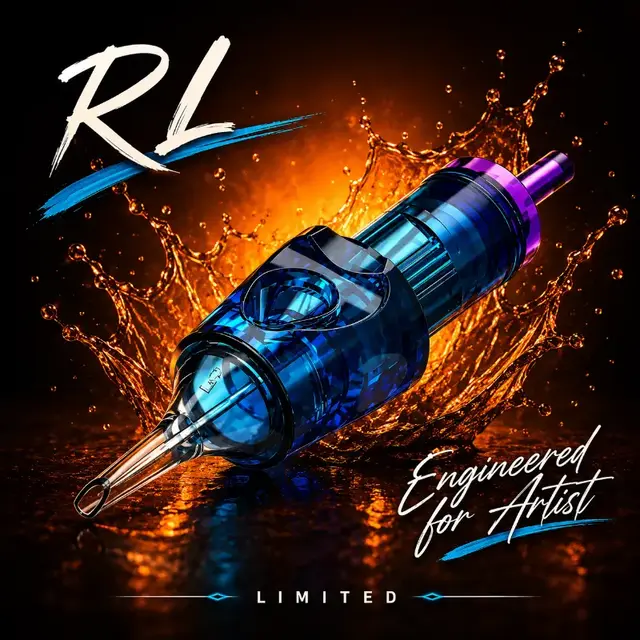
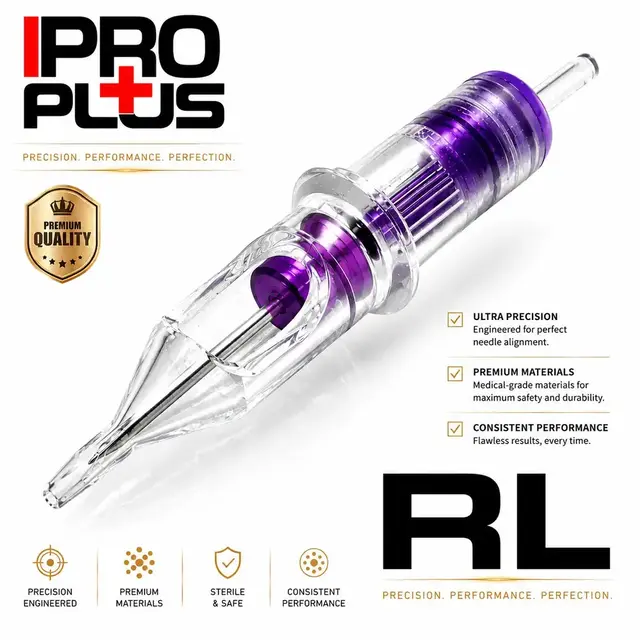
| RL | Round Liner — needles grouped tightly in a circle | Outlines, clean linework, fine detail |
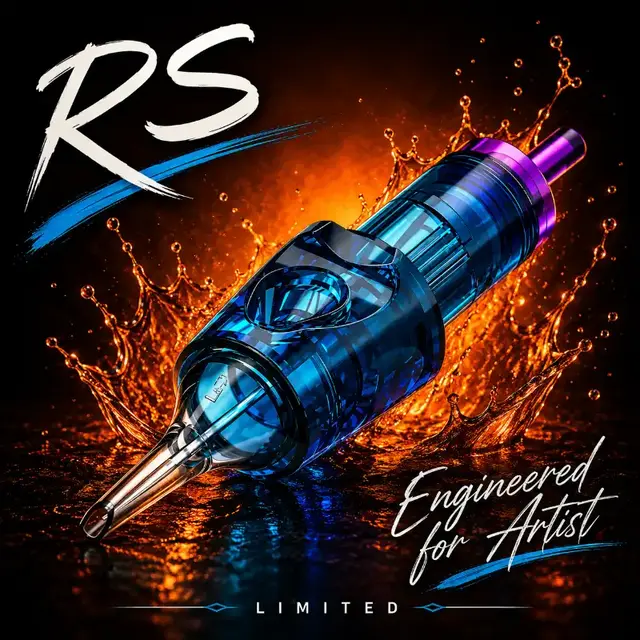
| RS | Round Shader — needles in a circle, spaced more loosely | Small-area shading, small fills |
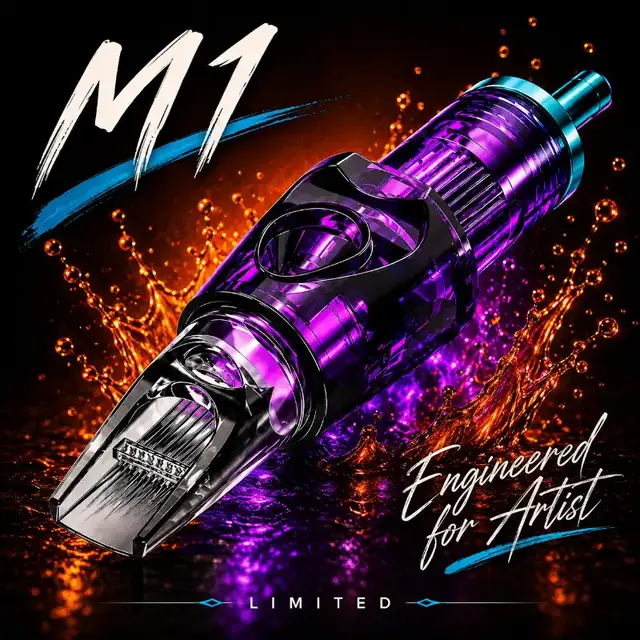
| M1 | Magnum — needles stacked in two offset rows | Shading and colour packing on larger areas |
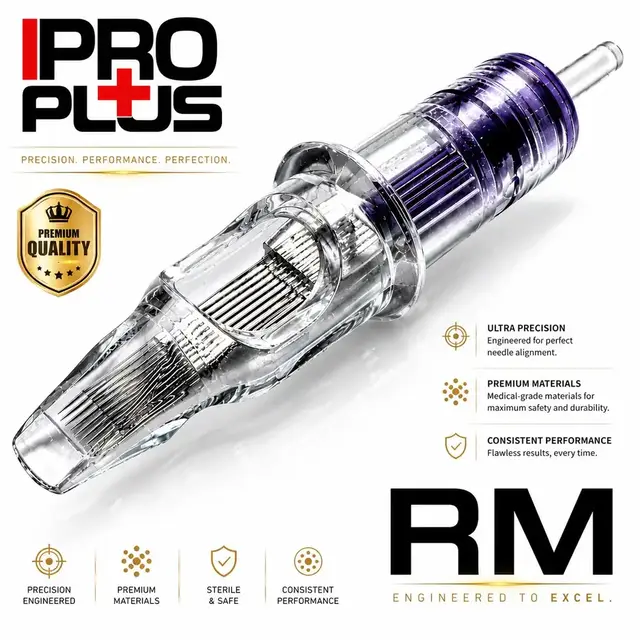
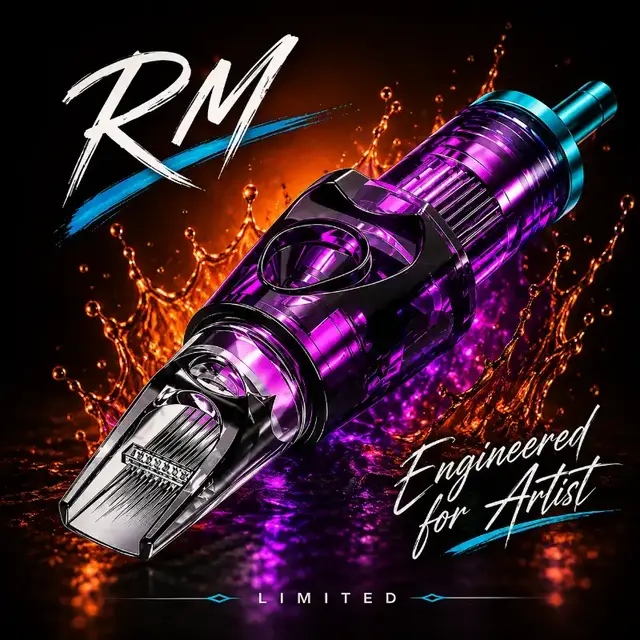
| RM | Curved (Soft Edge) Magnum — magnum with a rounded profile | Soft shading and smooth transitions without hard edges |
| F | Flat — needles in a single straight row | Bold lines, geometric work, straight fills |
Liners are soldered on a tighter grouping so the ink goes in as one crisp mark. Shaders and magnums spread the same work across a wider footprint, which is why they cover area faster and are gentler on the skin when you move them correctly.
Diameter: #08, #10 and #12
- 0.25 mm (#08, often called "bugpin"): delivers less ink per pass and gives you finer control — ideal for detail, fine lines and delicate greywash.
- 0.30 mm (#10): the versatile middle ground between control and ink flow — many artists run #10 for almost everything.
- 0.35 mm (#12, "standard"): higher ink flow — suited to bold lines and solid colour packing.
A smaller diameter is not "better" — it simply trades ink flow for precision. Many artists line with #10 or #12 and switch to #08 bugpins for fine detail work.
Taper: the shape of the point
Taper is the length of the sharpened tip. A short taper deposits ink quickly and assertively — good for bold lines and solid colour. A long or extra-long taper releases ink more gradually, which suits soft shading and subtle greywash gradients. Most brands print the taper on the box (short, medium, long, extra-long), and some liners come in "tight" versions where the grouping is soldered closer for even crisper lines.
Outlines → RL. Large-area shading → RM (curved, forgiving) or M1. Small fills and fine grey → RS. You do not need dozens of configurations to work well: a sensible set of RLs plus a few RMs covers the majority of tattoos.
Cartridges in the catalogue
Matching needle to machine and style
- Fine line and script: 1RL–3RL in #08 or #10, long taper, on a shorter stroke.
- Traditional and bold outlines: 5RL–9RL in #12, short to medium taper.
- Black and grey realism: RM magnums (7RM–13RM) with long taper for smooth gradients.
- Colour packing: M1 or RM magnums in #12 — let the needle do the work rather than overworking one spot.
- Whip shading and texture: 3RS–5RS or a small magnum, depending on the effect you want.
Common mistakes when choosing needles
- Buying one of everything "to try": you end up with half-used boxes. Start from the work you actually do.
- Lining big, bold work with tiny groupings — multiple passes damage the skin more than one correct pass with the right needle.
- Ignoring taper entirely: two 9RMs with different tapers behave like different needles.
- Switching brands constantly: groupings and tapers vary slightly between manufacturers, and your muscle memory pays the price.
Frequently asked questions
What do RL, RS, RM and M1 mean on tattoo needles?+
RL is Round Liner (tight circular grouping, for outlines and linework). RS is Round Shader (looser circle, for small shading and fills). M1 is a weaved Magnum (two offset rows, for shading and colour packing on large areas). RM is a Curved or Soft Edge Magnum, which has a rounded profile for soft, smooth shading.
How do I read a code like 1207RL?+
The first two digits are the diameter (12 = 0.35 mm), the next digits are the number of needle points (07 = seven needles), and the letters are the configuration (RL = Round Liner). So a 1207RL is seven round-liner needles at 0.35 mm.
Which needle diameter should I choose?+
0.25 mm (#08) for fine detail and thin lines, 0.30 mm (#10) as a versatile all-rounder, and 0.35 mm (#12) for bold lines and colour packing. Smaller diameters give control; larger diameters give ink flow.
What is needle taper and does it matter?+
Taper is the length of the sharpened point. Short tapers deposit ink quickly and suit bold lines and solid colour; long and extra-long tapers release ink gradually and suit soft shading and greywash. Two needles with the same grouping but different tapers behave noticeably differently.