Tattoo aftercare: a simple guide for clients
A good tattoo can be spoiled in the fortnight after the appointment. The routine that protects it is genuinely simple — gentle washing, thin moisturising, and patience. This guide is general information: your artist's instructions come first, and a doctor's advice overrides everything.
The first hours, washing, moisturising, what to avoid and what normal healing looks like week by week — plus the signs that mean you should speak to a doctor.
The first hours
- Keep the wrap on for as long as your artist told you — typically a few hours for classic film; breathable "second skin" films can stay on for days.
- Wash your hands before touching the tattoo. Every time.
- When the wrap comes off, expect some ink, plasma and a little blood on it — completely normal.
Washing
- Wash gently with lukewarm water and a mild, fragrance-free soap.
- Use only your clean hand — no cloths, sponges or scrubbing.
- Pat dry with a clean paper towel. Do not rub, and skip the fabric towel — it carries bacteria and lint.
- Repeat once or twice a day while the tattoo is still weeping.
Moisturising
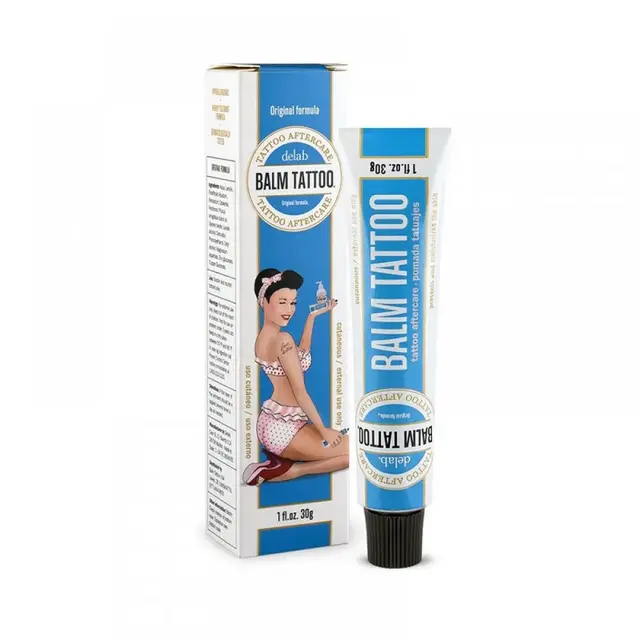
Once the skin is dry, apply a thin layer of the aftercare product your artist recommended — typically a panthenol-based cream or a dedicated tattoo balm. Thin is the operative word: a thick layer suffocates the skin and traps moisture. "Thin and regular" beats "thick and rare" every time.
Aftercare products in the catalogue
What to avoid while healing
- Do not scratch or pick the flakes and scabs — they fall off on their own, and picking pulls ink out with them.
- No swimming pools, sea, baths, saunas or hot tubs for 2–3 weeks. Showers are fine.
- Keep it out of direct sun while healing; once healed, use a high-SPF sunscreen on it — permanently, if you want it to stay sharp.
- Wear loose, clean cotton over the area; avoid fabrics that stick or rub.
- Skip heavy gym sessions that stretch or sweat-soak the area for the first days.
What normal healing looks like
- Days 1–3: redness, tenderness, a mild burning feeling; the tattoo weeps plasma and excess ink.
- Days 4–14: itching and thin flaking skin — the stage where discipline matters most.
- Weeks 2–4: the surface looks dull or slightly cloudy while the deeper layers finish healing; the true colours return afterwards.
Spreading redness, pain that increases after day three, yellow-green discharge, fever, or red streaks radiating from the tattoo can be signs of infection. Do not experiment with home remedies — contact your GP or NHS 111. Seeking advice early is never the wrong move.
Frequently asked questions
How long should I keep the film on a new tattoo?+
Follow your artist's instructions: classic cling-film-style wraps usually come off after a few hours, while breathable second-skin films can stay on for several days. When in doubt, ask your artist rather than guessing.
What should I wash a new tattoo with?+
Lukewarm water and a mild, fragrance-free soap, applied with a clean hand only. Pat dry with a clean paper towel and follow with a thin layer of your recommended aftercare product.
Can I swim or sunbathe with a healing tattoo?+
No — avoid pools, the sea, baths and saunas for two to three weeks, and keep the tattoo out of direct sun while it heals. Once healed, protect it with high-SPF sunscreen to keep the ink crisp long term.
Is it normal for a new tattoo to peel and itch?+
Yes. Between roughly day four and day fourteen the tattoo flakes and itches as the surface skin renews. Do not scratch or pick — the flakes carry ink with them if pulled off early. If itching comes with spreading redness or discharge, seek medical advice.