Black tattoo inks compared: lining, shading and blackout blacks
Black is the workhorse of tattooing — and the most misunderstood bottle on the shelf. Manufacturers formulate blacks differently for different jobs, and using the wrong one is why lines blur, washes turn muddy, or fills heal patchy. Here is the map.
"Black ink" is at least three different products. How lining, shading and high-saturation blacks differ, how they dilute and heal, and how to pick the right bottle per job.
The three families of black
Lining black
High pigment load, slightly thicker body, built to deposit a dense, crisp mark in one pass and to stay sharply defined as it heals. This is the bottle for outlines, script and any line that must still look like a line in ten years.
Shading black
Formulated to dilute predictably and layer smoothly — a thinner consistency and pigment character chosen for even grey values rather than maximum density. Dilute a shading black and you get clean, neutral greys; dilute a heavy lining black and you often get grainier, less predictable washes.
High-saturation (blackout) black
Maximum-density blacks made for large solid coverage — blackwork sleeves, heavy tribal, cover-up foundations. They prioritise saturation and even healing across big areas over fine-line crispness.
| Job | Black to use | Why |
|---|---|---|
| Outlines & script | Lining black | Dense one-pass marks, crisp healed edges |
| Black & grey shading | Shading black or greywash set | Predictable dilution, neutral greys |
| Solid blackwork / tribal | High-saturation black | Even coverage at scale, deep healed black |
| All-round (budget setup) | Quality versatile black | Acceptable at everything, master of none |
Brands and how to judge them
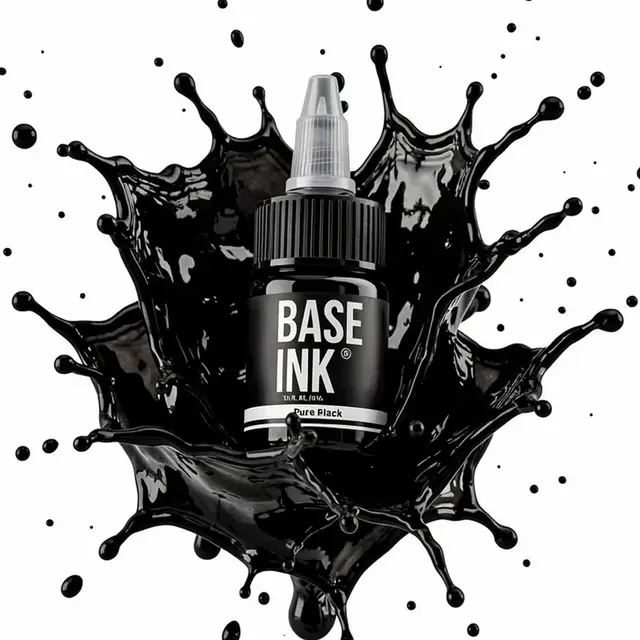
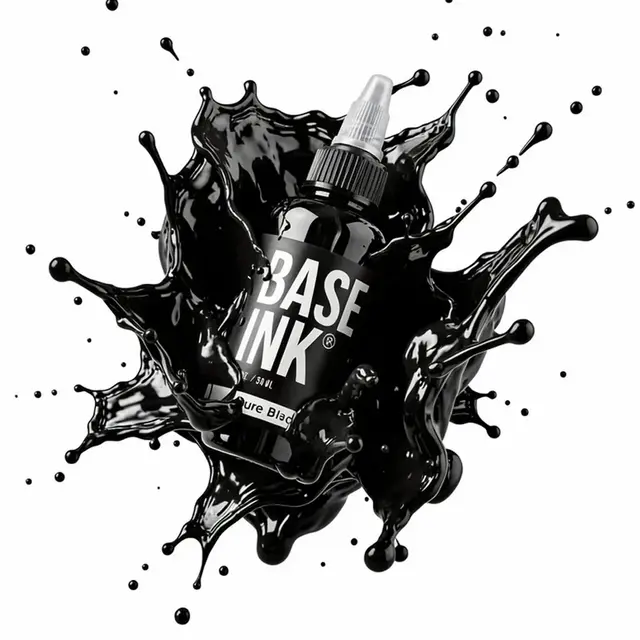
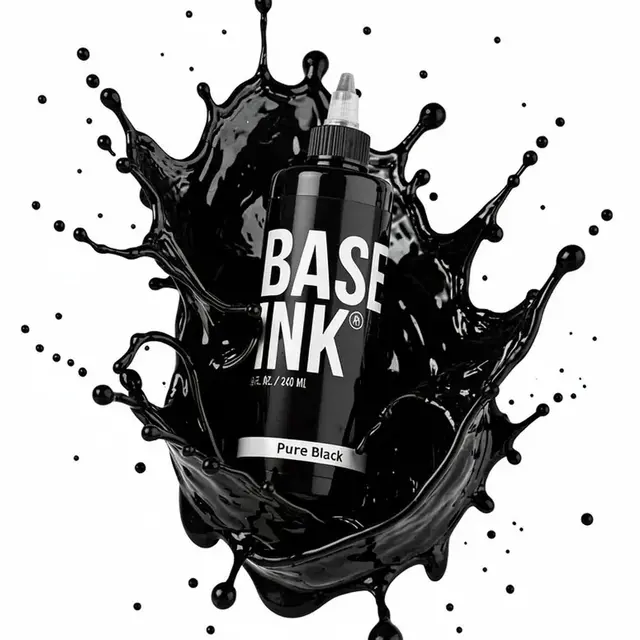
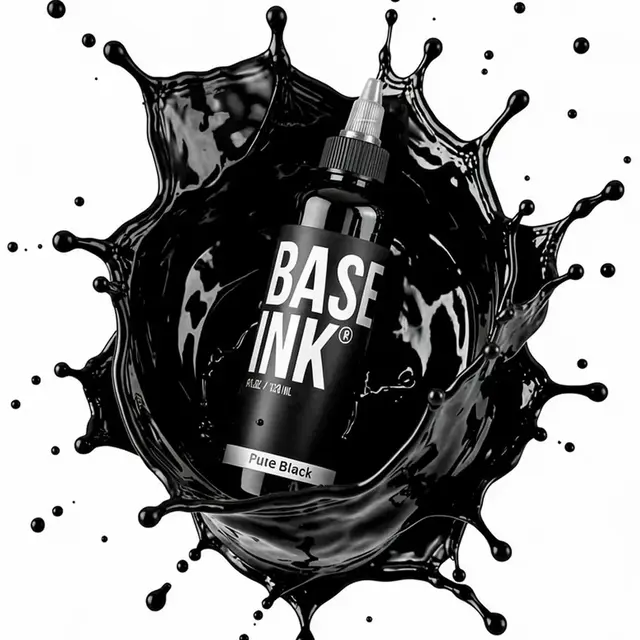
Some manufacturers have built their whole identity around black — Panthera, the Italian blackwork specialist, is the best-known example, with dedicated lining and shading formulations. Ranges like Base Ink similarly split their blacks by purpose rather than selling one bottle for everything. Whatever the name on the label, judge a black the same way: purpose-formulated rather than generic, full ingredient disclosure, batch number and expiry date, sterile seal, and REACH compliance — the EU restriction has become the practical benchmark for inks sold in the UK market.
- Undertone: blacks lean subtly warm or cool as they heal — noticeable mostly in large shaded areas. Stay with one brand family within a project.
- Dilution behaviour: a good shading black produces the same grey from the same ratio, every time. Test your ladder when adopting a new black.
- Healed result: wet black always looks perfect; the honest comparison between brands happens weeks later. Photograph healed work before crowning a favourite.
- Consistency between bottles: the mark of a serious manufacturer is that this question never comes up.
Three bottles cover almost everything: one lining black you trust, one shading black (or a pre-mixed greywash set built on it), and — only if you do large-scale blackwork — one high-saturation black. More bottles than that is collecting, not equipping.
Black inks in the catalogue
Frequently asked questions
Can I use the same black ink for lining and shading?+
You can, but purpose-made blacks behave better: lining blacks are dense and crisp, while shading blacks dilute into smoother, more predictable greys. If you work both regularly, owning one of each (or a lining black plus a greywash set) is worth it.
What is blackout or high-saturation black for?+
Large areas of solid black — blackwork sleeves, heavy tribal and cover-up foundations. These blacks are formulated for even saturation and consistent healing at scale rather than for fine-line definition.
Why do black inks heal slightly warm or cool?+
Different pigment formulations carry subtly different undertones that show once healed, mostly in large shaded areas. It is not a defect — but it is a reason to stay within one brand's black family for a single project.
How do I know a black ink is safe to use?+
Buy from a traceable manufacturer via a reputable supplier, and check the label: full ingredient list, batch/lot number, expiry date, sterile seal and a REACH compliance statement. Avoid decanted, unlabelled or resold bottles entirely.